
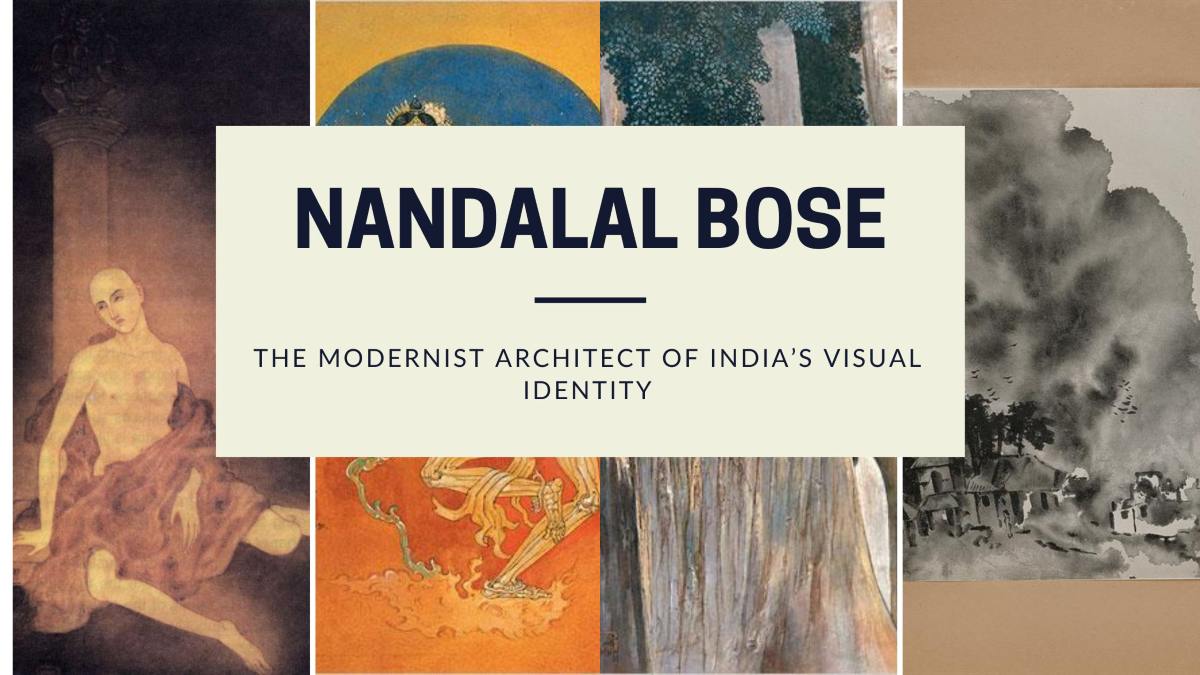

A giant in the Indian modernism space, Nandalal Bose was a creative force whose brush captured an India in transition and forged her visual identity. From his village upbringing to the intellectual world of Shantiniketan, Nandalal's career was a journey of exploration into Indian art heritage, synthesizing Western and Eastern influences. This bio explores his life and development.
Nandalal Bose was many things. Architect of India's visual heritage, he helped define the Indian aesthetic at a time when India was colonized, searching for her lost visual identity. He helped design the visual aesthetics of the Indian constitution. The design of the independent India's highest civilian awards, Padma Bhushan and Padma Vibushan. He helped define the art heritage of Vishwa Bharti University, founded by Nobel laureate Rabindranath Tagore. And he helped Gandhi realise his vision of village art.
Born on December 3, 1882, in the remote village of Kharagpur in the Monghyr District of Bihar to Purnachandra Bose and Kshetramoni Devi. Nandalal grew up in a household with two brothers and two sisters. He lost his mother when he was eight years old. The demise of his mother left a profound impact on him. Yet her memory as a simple, creative homemaker who loved traditional village crafts was a lasting source of inspiration for him. Growing up in Kharagpur, Nandalal was fascinated by the local artisans. He watched for hours the potters, woodworkers, metalsmiths, and scroll-painters going about their work. He quickly developed an early interest in simple village arts.
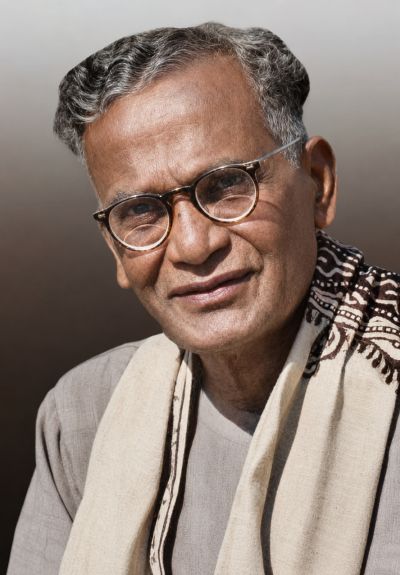 Nandalal Bose - Artist, painter, illustrator of the Constitution of India
Nandalal Bose: Education of an Artist
Nandalal Bose's entry into the Government School of Art in Calcutta in 1905 marked a turning point in his life. At the time, the school was led by Principal E.B. Havell and Vice Principal Abanindranath Tagore. Both of whom were on a mission to dismantle the dominance of British academic realism. Havell sought to 'Indianize' art education by replacing Western plaster casts with classical Mughal, Rajput, and Pahari paintings.
Abanindranath Tagore, whom Nandalal considered his guru, taught his students to look inward. Nandalal quickly became Abanindranath’s most accomplished student, absorbing the subtle transitions of the wash technique. Under Abanindranath’s tutelage, Nandalal began to synthesize diverse influences. While early works like Mahasveta showed an initial engagement with the popular oil paintings of Raja Ravi Varma, Nandalal quickly abandoned Western academic painting techniques to embrace the spiritual, reflective essence of the Bengal School of Art.
Nandalal Bose and the influence of Ajanta
In 1910, at the request of Margaret Noble, aka Sister Nivedita (1867-1911), Swami Vivekananda’s Irish follower, Nandalal spent three months copying the Ajanta frescoes along with fellow students Asit Kumar Haldar, K. Venkatappa, and Samarendra Gupta.
In 1944, in a letter to his student Kanai Samanta, Nandalal recalled how he became involved with the project:
'(Lady) Herringham, an aged English lady artist, a major oriental art copyist, came to copy Ajanta, most probably at the instance of the Oriental Art Society in England. She needed some copyist assistants and approached Abani-babu through Sister Nivedita. Abani-Babu asked me and Asit [Kumar Haldar], but we hesitated, being in those days lazy. Hearing about this, Nivedita sent for me and convinced me that this was particularly necessary for us Indian artists, and would help us in our growth as artists in the days to come, and forbade us to miss this opportunity. And finally [she] pushed us off by force, by booking our tickets and making other arrangements. One could say no to Abani-babu, but it was hard to say no to her; she was a very tough woman.'
Bose and the Influence of Pan Asian & East Asian Art
Nandalal was exposed to the Japanese influence when he came in contact with Japanese art critic Okakura Kakuzo. On his second visit to Calcutta (Kolkata) in 1912, he was introduced to Nandalal through the Tagore household. Okura had established a warm relationship with Tagore during his first Calcutta visit in 1901–1902. Okakura’s art movement of 'Asia is One' advocated the philosophy of a unified Asian aesthetic resistance against Western materialism. This philosophy resonated deeply within the Swadeshi circle, at a time when India was in the throes of nationalism and the early freedom movement.
Okakura presented the thirty-year-old Bose with a traditional stick of Japanese ink. A gift that sparked Bose's lifelong experimentation with ink painting (sumi-e). From 1915 to 1917, Japanese artist Arai Kampo resided in Calcutta, collaborating closely with Bose and teaching him the syntactic logic of calligraphic line and brushwork.
Bose's 1924 journey to Burma, China, Malaysia, and Japan with Rabindranath Tagore further solidified his East Asian techniques. In Japan, Bose was hosted by Yokoyama Taikan and observed the simplicity of the Rimpa school of art and the rapid strokes and spontaneous execution of haboku (broken ink). These techniques allowed Bose to move away from the delicate, romantic atmosphere of his early wash paintings, which he learnt from Abanindranath, towards a more structured, linear, and tactile approach. Nandalal inserted East Asian-style signatures into many of his paintings, including Dolan Champa, his 1952 painting of flowers from a plant native to Bengal. As John M. Rosenfield (1924–2013), the preeminent American art historian and curator, noted, 'He signed his name vertically, Chinese fashion, and added a seal impression in red ink; the writing in both is in Bengali even though the characters are Chinese in appearance.' a visual testament to his Pan-Asian hybrid modernism.
Nandalal Bose: The Santiniketan Experiment
The convergence of Rabindranath Tagore's educational vision and Nandalal Bose's artistic maturity found its ultimate home at Santiniketan, where Rabindranath Tagore setup his Vishva Bharti University (World University). According to Sugata Bose, Rabindranath was able to lure Nandalal to Santiniketan in 1917 to teach at Vishva Bharti, and three years later he persuaded Nandalal to become principal of Visva-Bharati’s Kala Bhavan (Art House). At Kala Bhavana, Bose freed art education from the formal classroom setting and rigid examinations to an open-ended, experiential pedagogy. He believed that the teacher should be a companion in creative discovery rather than a dogmatic instructor. Nandalal synthesized his educational methodologies in two seminal Bengali texts: Drishti o Shrishti (Vision and the Creation) and Shilpa Charcha (The Practice of Art). Nandalal's daughters and sons also took active part in this creative community: his eldest daughter, Gouri Bhanja, excelled in stagecraft and performed the lead role of Srimati in the historic staging of Tagore's dance drama Natir Puja; his second daughter, Jamuna Sen, became a pioneer in the temporary decorative art of Alpona; and his son, Biswarup Bose, studied printmaking in Japan, eventually returning to teach graphic arts at Santiniketan.
Nandalal Bose and Gandhi
As with all artists of that period, Nandalal was deeply connected with the Indian independence movement. He was particularly drawn to Gandhi's philosophy of non-violence (satyagraha) and his emphasis on rural regeneration. According to art historian Partha Mitter, Nandalal considered himself a spiritual disciple of Mahatma Gandhi. To mark the 1930 arrest of Gandhi during the civil disobedience movement of the Dandi march (salt satyagraha), Nandalal carved a minimalist, black-and-white linocut of Gandhi walking with a staff. This iconic print, alongside his 1936 linocut of the Pashtun pacifist leader, Frontier Gandhi, Abdul Ghaffar Khan, became the defining visuals of the freedom movement.
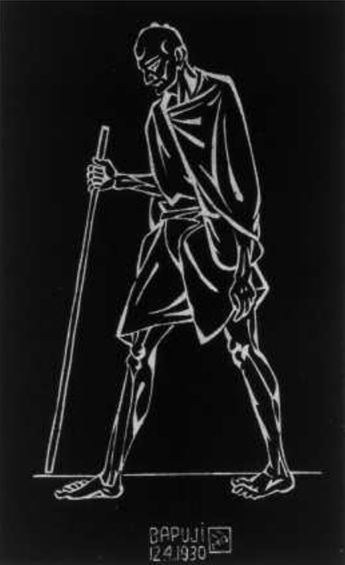 Linocut Bapuji by Nandalal Bose (image source: Wikimedia Commons)
Title: Dandi march (Bapuji)
Creator: Nandalal Bose
Type: Linocut on paper
Created on: April 12, 1930
Physical Dimensions: 13.74 x 8.86 inches (34.9 x 22.5 cm)
Location: National Gallery of Modern Art, New Delhi
Gandhi, an astute observer of men, instantly recognized Nandalal's unique ability to elevate the simple into high art. Gandhi invited him to design the temporary exhibition pavilions for the Lucknow Congress session in 1935. In 1937, during the Congress session held in rural Faizpur, Gandhi entrusted him the responsibility of planning the entire township using local materials like mud, bamboo, and straw. When he initially hesitated to take on the massive architectural design for the Faizpur Congress, Gandhi encouraged him, 'I do not want an expert pianist, I want a devoted fiddler'.
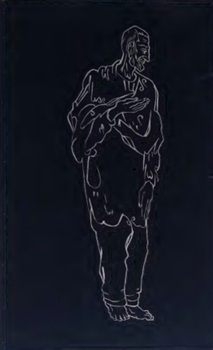 Linocut Abdul Ghaffar Khan by Nandalal Bose (image source: Wikimedia Commons)
Title: Abdul Ghaffar Khan
Creator: Nandalal Bose
Type: Linocut on paper
Created on: 1936
Physical Dimensions: 11.73 x 7.36 inches (29.8 x 18.7 cm)
Location: National Gallery of Modern Art, New Delhi
At the Haripura Congress of 1938, Nandalal and his students spent months painting nearly 400 posters. Of these, Nandalal produced 81 of them. These 'Haripura Posters' did not depict political leaders or historical epics, but instead celebrated the dignity of ordinary rural life. Depicting tailors, musicians, drum players, hunters, and mothers. Nandalal later wrote, 'Following the pat style, we did a large number of paintings and hung them everywhere—on the main entrance, inside the volunteers’ camps, even in the rooms meant for Bapuji [Gandhi] and Subhasbabu [Netaji Subhas Chandra Bose], the President.'
However, as Parth Mitter notes in his book, The Triumph of Modernism, 'after Haripura, Nandalal withdrew from participating in Congress sessions as he was disappointed with Gandhi’s treatment of Subhas Bose, his other hero.'
Masterpieces of the Kirti Mandir
Following his success at the Haripura Congress session, Nandalal was commissioned by Maharaja Sayajirao Gaekwad III of Baroda to paint a series of monumental murals in the central assembly hall of the Kirti Mandir (Temple of Glory), the ancestral cenotaph, built in 1936 to honor the Gaekwad ancestors. Completed between 1939 and 1947, this massive project covers more than six hundred square feet of wall space, demonstrating Nandalal's mastery of mural art. Nandalal chose to avoid Western trompe l'oeil perspective, ensuring that the paintings maintained the flat, structural integrity of the architectural space. The murals were designed on paper cartoons at Santiniketan and executed in dried plaster at Baroda. For these murals, Nandalal went back to the historicism of the Hindu epics, as he felt they were more royal and majestic subjects suitable for the commission. The murals present a non-linear narrative of purification, devotion, and heroism in the face of death.
The south wall features the Descent of the Ganges (completed in 1939), an iconic image modeled after a thirteenth-century sculpture of the wrathful deity Bhairava at the Sun Temple at Konarak, representing spiritual purification. The north wall contains the Life of Meerabai (1940), depicting the sixteenth-century female saint's mystic devotion to Krishna. The east wall features a second version of Natir Puja (1943), showcasing the martyrdom of Srimati. The west wall contains Abhimanyu Badh (The Slaying of Abhimanyu, 1946–1947), a five-panel series depicting the tragic yet heroic death of Arjuna's son in the Kurukshetra war.
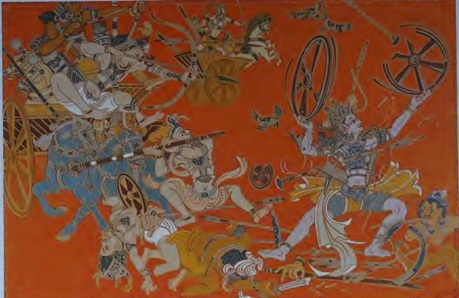 Abhimanyu Badh Or The Slaying of Abhimanue By Nandalal Bose (image source: Wikimedia Commons)
Title: Abhimanue Badh (or The Slaying of Abhimanyu)
Creator: Nandalal Bose
Type: Tempera on paper
Created on: 1946
Physical Dimensions: 51.8 x 70.47 inches (130 x 179 cm)
Location: National Gallery of Modern Art, New Delhi
In 1975, after water damage threatened the murals, Bose's son, Biswarup Bose, and his student, Sukhen Ganguly, successfully restored the works using the original cartoons preserved at the National Gallery of Modern Art.
Artworks of Nandalal Bose: 10 Famous Paintings
Sati (Second version, 1943; Original, 1907)
The original painting was produced during Nandalal's student days and won immediate acclaim for its delicate, line-less wash technique. He exhibited Sati at a show sponsored in 1907 by the Indian Society of Oriental Art in Calcutta and won the gold medal at the Industrial Exposition.
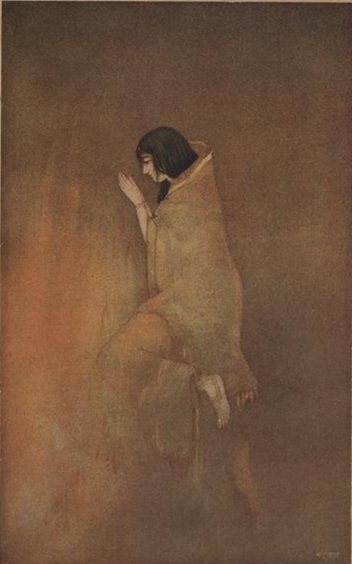 Sati by Nandalal Bose (image source: Wikimedia Commons)
Title: Sati
Creator: Nandalal Bose
Type: Watercolor, tempera, and gold on paper
Created on: Second version, 1943, (First version, 1907)
Physical Dimensions: 12.75 x 8.94 inches (32.4 cm x 22.7 cm)
Location: National Gallery of Modern Art, New Delhi
This second version reprised the composition to show the legendary bride of Siva stepping unmoved into her sacrificial pyre. The image's demure yet powerful asceticism was embraced by nationalist leaders as a symbol of the spiritual strength of Indian womanhood. It is housed in the National Gallery of Modern Art (NGMA), New Delhi
Siva Drinking World Poison (Second version, July 1, 1933; Original, 1911)
Created as a major illustration for a volume on Hindu and Buddhist epics, this painting depicts the supreme deity Shiva, the cosmic destroyer, retaining the cosmic poison in his throat to save humanity.
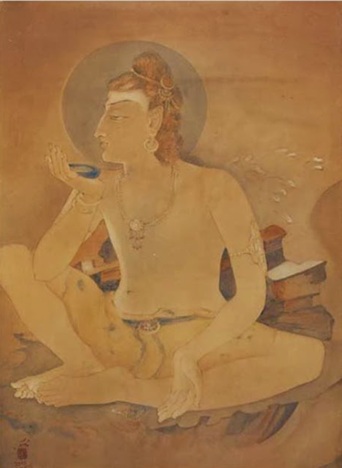 Shiva Drinking World Poison by Nandalal Bose (image source: Wikimedia Commons)
Title: Siva Drinking World Poison
Creator: Nandalal Bose
Type:Watercolor and tempera on paper
Created on: Second version, July 1, 1933
(First version, September 2, 1911)
Physical Dimensions: 30 x 21.85 inches (76 x 54 cm)
Location: National Gallery of Modern Art, New Delhi
Bose executed this work with a flat perspective and subtle color harmonies inspired by traditional Mughal and Rajput miniatures. Housed in the NGMA, New Delhi
Jatugriha Daha (Second version, May 20, 1943; Original, 1910–11)
The painting depicts an episode from the great Hindu epic Mahabharata. The painting narrates the dramatic escape of the five Pandava brothers and their mother from a lacquer firetrap.
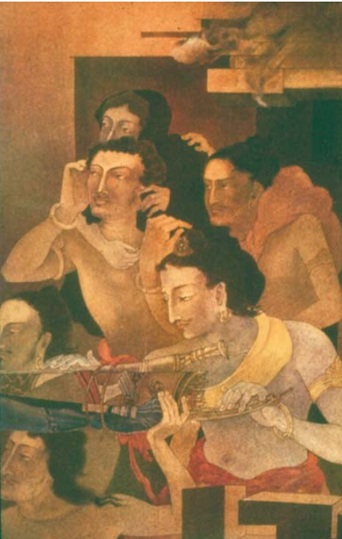 Jatugriha Dahan by Nandalal Bose ((image source: Wikimedia Commons)
Title: Jadugriha Daha (or burning of the lacquer house)
Creator: Nandalal Bose
Type: Watercolor and tempera on paper
Second version, May 20, 1943
Created on: (First version, ca. 1910-11)
Physical Dimensions: 8.94 x 12.5 inches (22.7 x 31.75 cm)
Location: National Gallery of Modern Art, New Delhi
This painting reveals the direct stylistic impact of the Ajanta cave murals copied by Nandalal. The rendering of the architecture, sculptural modeling, and firm contour lines create a classic, composed visual rhythm. Housed in the NGMA, New Delhi.
Sri Caitanya under Garuda Stambha (Second version, February 9, 1947; Original, 1910–15)
This atmospheric wash painting portrays the sixteenth-century mystic Hindu saint from Bengal, Caitanya in a mood of intense longing, resting against a massive stone pillar topped by the mythical mount Garuda.
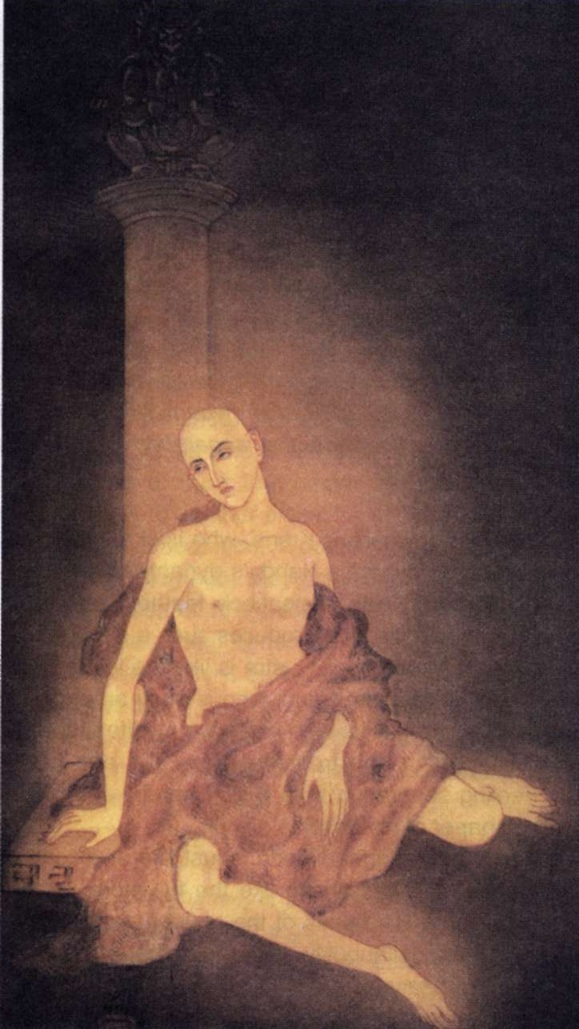 Sri Caitanya Under Garuda Stambha by Nandalal Bose (image source: Wikimedia Commons)
Title: Sri Caitanya under Garuda Stambha
Creator: Nandalal Bose
Type: Watercolor and tempera on paper
Created on: Second version, February 9, 1947
(First version, ca. 1910-15)
Physical Dimensions: 15.75 X 8.98 inches (40 x 22.8 cm)
Location: National Gallery of Modern Art, New Delhi
The soft, moody transitions of the wash technique emphasize the introspective, emotional state of the devotee. Housed in the NGMA, New Delhi
Sanghamitra Carrying the Sapling (April 6, 1929)
This life-size, calligraphic line drawing depicts the Buddhist nun (bhikkhuni) Sanghamitra, the eldest daughter of the Mauryan Emperor Ashoka, transporting a divine sapling of the original Bodhi tree to Sri Lanka.
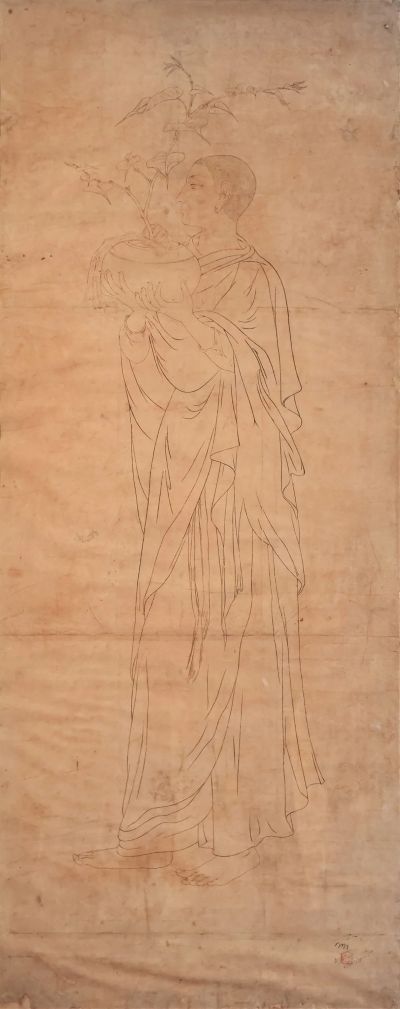 Sanghamitra Carrying the Sapling by Nandalal Bose (image source: Wikimedia Commons)
Title: Sanghamitra Carrying the Sapling
Creator: Nandalal Bose
Type: Ink on paper
Created on: April 6, 1929
Physical Dimensions: 72 x 28 inches (182.9 x 71.1 cm)
Location: National Gallery of Modern Art, New Delhi
The work is a prime example of Bose's mastery of fluid, calligraphic contours, reflecting his deep interest in Buddhist themes of non-violence. Housed in the NGMA, New Delhi.
Birth of Caitanya (circa 1931)
Serving as a cartoon for a pathbreaking veranda mural at Patha Bhavan, this painting utilizes bold, flat planes of color and geometric forms inspired by Orissan folk art and Rajasthani miniatures.
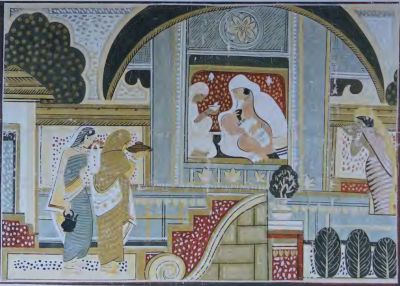 Birth of Caitanya by Nandalal Bose (image source: Wikimedia Commons)
Title: Birth of Caitanya
Creator: Nandalal Bose
Type: Tempera on paper
Created on: 1931
Physical Dimensions: 40 1/2 x 55 7/8 inches (102.8 x 141.3 cm)
Location: National Gallery of Modern Art, New Delhi
Nandalal chose an earthy color palette, successfully integrating the painting into its rural architectural setting. Housed in the NGMA, New Delhi.
Radha's Viraha (July 20, 1936)
Portraying the cowherd girl Radha burning with the fever of separation from Krishna, this tempera on silk masterfully combines Basohli-inspired color with angular, Egyptian-style posturing.
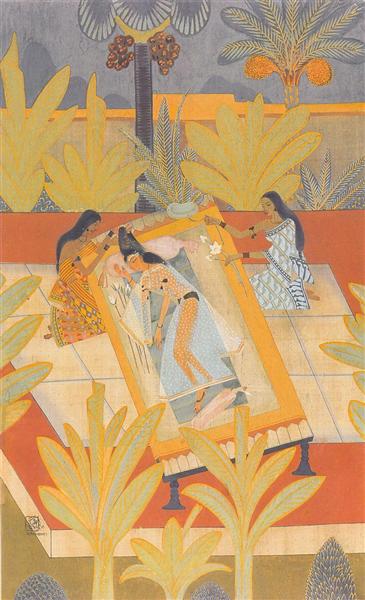 Radha's Viraha by Nandalal Bose (image source: Wikimedia Commons)
Title: Radha’s Viraha (or Radha’s Longing)
Creator: Nandalal Bose
Type: Tempera on silk
Created on: July 20, 1936
Physical Dimensions: 32 1/2 x 19 9/s inches (82.6 x 49.8 cm)
Location: National Gallery of Modern Art, New Delhi
The disquiet of the separated lover is conveyed through the unusual, tilting planes of the terrace and couch. Housed in the NGMA, New Delhi
Evening (August 7, 1941)
In this highly lyrical, asymmetrical landscape, a solitary female figure moves through a grove of trees under a fiery twilight sky.
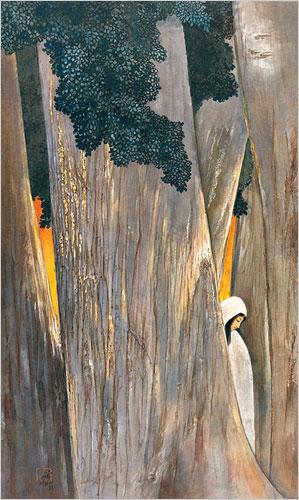 Evening by Nandalal Bose (image source: Wikimedia Commons)
Title: Evening
Creator: Nandalal Bose
Type: Tempera on paper
Created on: August 7, 199]
Physical Dimensions: 28 x 17 inches (71.4 x 43.5 cm)
National Gallery of Modern Art, New Delhi
The abstract pattern of the tree trunks in the foreground reveals a strong Japanese Rimpa design sensibility, leaving the painting's subject open to romantic interpretation. Housed in the NGMA, New Delhi
Annapurna (September 8, 1943)
In this haunting combination of wash and tempera, the goddess of abundance sits on a lotus holding a bowl of rice, while a skeletal Shiva performs his dance of destruction, Tandav, before her.
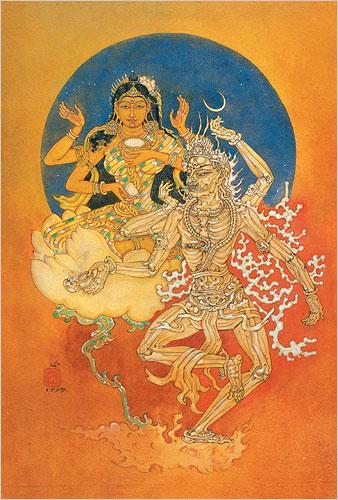 Annapurna by Nandalal Bose (image source: Wikimedia Commons)
Title: Annapurna
Creator: Nandalal Bose
Type: Watercolor and tempera on paper
Created on: September 8, 1943
Physical Dimensions: 17.24 x 11.73 inches (43.8 x 29.8 cm)
Location: National Gallery of Modern Art, New Delhi
Painted during the devastating Bengal famine of 1943, engineered by the British under the leadership of Winston Churchill, who in 1942 told his Secretary of State Leopold Amery, 'I hate Indians. They are a beastly people with a beastly religion'. The work is a powerful, bitter political allegorical critique of the artificial hunger that claimed 3 million lives under British rule. Housed in the NGMA, New Delhi.
Buildings in the Rains (April 4, 1955)
This late-career masterpiece demonstrates Nandalal Bose's absolute mastery of the Japanese haboku (broken ink) technique.
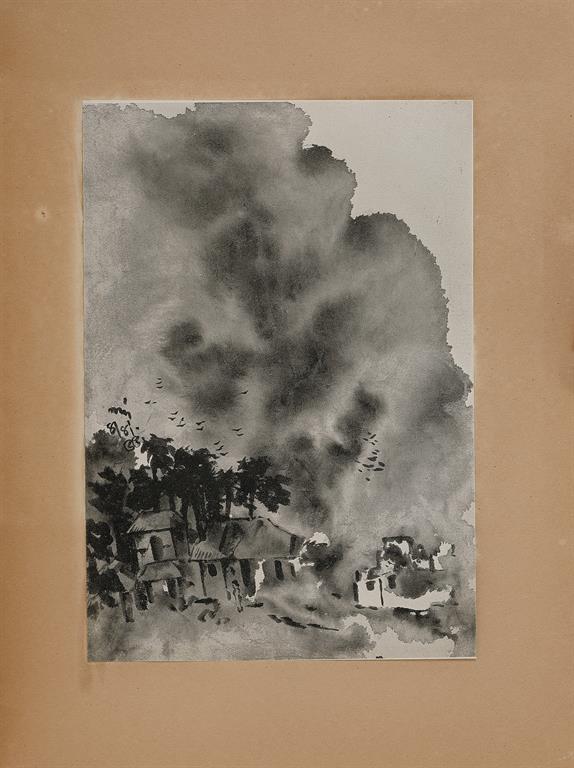 Buildings in the Rain by Nandalal Bose (image source: Wikimedia Commons)
Title: Buildings in the Rains
Creator: Nandalal Bose
Type: Ink on paper
Created on: April 4, 1955
Physical Dimensions: 13.74 x 9.61 inches (34.9 x 24.4 cm)
National Gallery of Modern Art, New Delhi
Using rapid, spontaneous washes of black ink, Bose captures the heavy atmosphere of a monsoon downpour over a cluster of village houses. He showcases his ability to find the essential rhythm of nature with minimal means. Housed in the NGMA, New Delhi.
Nandalal Bose: Academic Honors and Recognition
Throughout his long career, Nandalal Bose received numerous accolades that solidified his status as India's preeminent modern artist. After graduating from the Government School of Art in 1902, his works were exhibited regularly at international exhibitions in London, Paris, Geneva, and the United States, earning him a global reputation. His academic honors and major awards are compiled in the table below.
| Year | Honor / Award | Bestowing Institution | Significance |
|---|---|---|---|
| 1907 | ISOA Scholarship | Indian Society of Oriental Art | First recipient of this nationalist funding. |
| 1950 | Honorary D.Litt. | Banaras Hindu University | Early academic recognition of his national status |
| 1952 | Deshikottama | Visva-Bharati University | Conferred by the university founded by Tagore. |
| 1954 | Padma Vibhushan | Government of India | First artist to receive India's second-highest civilian award. |
| 1954 | Elected Fellow | Lalit Kala Akademi | Second artist to be honored by the National Academy of Art. |
| 1957 | Honorary D.Litt. | University of Calcutta | Conferred for outstanding contributions to Indian art. |
| 1965 | Tagore Birth Centenary Medal | Asiatic Society of Bengal | Awarded for his contribution to the visual arts. |
Criticism Nandalal Bose: A Critical Perspective
Much like Raja Ravi Varma's works, the critical reception of his oeuvre reflects the ideological shifts in twentieth-century history of Indian art. His paintings were enthusiastically received by nationalists, intellectuals, and international art publications like the Japanese journal Kokka, which hailed him as a pioneer of an authentic Asian revival. But as the century advanced, the enthusiasm for his work decreased and criticism of his works increased.
As Partha Mitter eloquently put it, “The burning issue of the day was whether the pursuit of naturalism was tantamount to a betrayal of national ideals and whether the historicism of the Bengal School was the sole path to India’s artistic revival.”
Traditionalists criticized his willingness to incorporate folk forms and Sino-Japanese techniques into his art as an aberration from the strict rules in ancient Sanskrit texts. Conversely, academic realists and modernists such as Hemen Mazumdar were harsh on the Bengal School. In a late article, just before his death, ‘Cobwebs of the Fine Arts World’, he summed up his contempt for the ‘authenticity’ of the Bengal School, claiming that their inability to draw was camouflaged by their assertion of a ‘spiritual’ world beyond appearances.
Perhaps the most devastating criticism came from Amrita Sher-Gil, a rising artist of that period. With her characteristic acerbic tone, Sher-Gil noted, 'more on grounds of priority than of merit, for in spite of its illustrious antecedents in Ajanta and the equally admirable later schools of Indian miniature painting, which the Bengal movement strives to emulate, it cannot claim to have captured the spirit of Indian art of bygone days. Far from fulfilling its vast ambition, this school is responsible for the stagnation that characterizes Indian painting today. The tenets of the Bengal School seem to have a cramping and crippling effect on the creative spirit.' Forced to concede Nandalal’s pre-eminence, privately she dismissed his ‘uninspired cleverness’, which was ‘capable of producing good work only under the inspiration of a particular school’
With the emergence of post-independence modernism, younger critics often dismissed Bose's mythological subjects as historicist and romantic, preferring the bolder modernism of his students Ramkinkar Baij and Benodebehari Mukherjee.
Fortunately, in recent times, art historians have reevaluated Nandalal's contributions as 'Contextual Modernism'. Contemporary scholarship locates him as a modern artist who constructed a non-Western modernist scaffolding to bridge the transition from a colonized culture to a sovereign national aesthetic using local traditions and materials.
Nandalal's Influence on Indian Art and Visual Identity
Nandalal's greatest contributions were to independent India's sovereign identity. He was commissioned to design India's highest civilian awards, including the Bharat Ratna, Padma Vibhushan, and Padma Shri, at the request of Prime Minister Jawaharlal Nehru.
In 1950, Bose was commissioned to decorate and illustrate the original manuscript of the Constitution of India. Under his direction, a group of artists from Santiniketan spent years illustrating each section of the document with artwork depicting different eras from Indian history. From the Indus Valley Civilization to the epics of India to the freedom struggle. Among his key student assistants, Beohar Rammanohar Sinha designed and decorated the famous Preamble page, which features a lotus, peacock, Ashoka Chakra, and four animals (the bull, elephant, horse, and tiger). Dinanath Bhargava beautifully illustrated the Lion Capital of Ashoka (the National Emblem).
Prem Behari Narain Raizada performed the intricate English and Hindi calligraphy, while Bose and his team used gold leaf and stone-derived colors to frame each page, turning the document into a living monument of Indian history.
Nandalal Bose: His Demise and Continued Relevance
After retirement, Nandalal settled down in his home studio. He suffered from a failing heart that severely restricted his movements. Despite these constraints, he remained highly productive in his home studio at Santiniketan. As Achutan Ramachandran Nair (1935 – 2024) noted in his essay on Nandalal Bose, 'His art had become completely austere, and he worked tirelessly, producing one painting a day for fifteen years.'
Bose passed away on April 16, 1966. His passing was met with national mourning. Government of India later declared his oeuvre a 'National Treasure' under the Antiquities and Art Treasures Act of 1972, legally protecting his paintings from export. Nandalal Bose remains a towering figure of modern Indian art, linking premodern traditions and twentieth-century modernism. Bose demonstrated that modernism did not require the non-critical absorption of Western styles; instead, he showed an indigenous, decolonial, and unapologetically Indic visual approach that continues to inspire artists and scholars across the postcolonial world.
About Paintphotographs
Paintphotographs.com is India's leading custom art platform. We turn your favorite photos, pics, and images into luxurious, handmade portrait paintings. Our work includes handmade portraits, custom oil reproductions, charcoal drawings, and sketches. As a team of accomplished artists, we use museum-quality canvas, best international brands of colors such as Winsor & Newton and Daler Rawney. We work with various mediums, including oil, acrylic, mixed media, graphite, and charcoal.
We have also introduced ready-to-hang canvas wall art. Check our Varanasi Ghat painting collection and Buddha wall art collection.
To order a custom handmade oil portrait painting you can visit our order now page. You can order custom Wedding Paintings, Couple Paintings, Memorial Paintings, Family Paintings, Baby portraits and Children Paintings, Photo to paintings, and Pet Portrait Paintings from Photo.
You can visit our pricing page to learn about the prices of our portrait paintings. To connect with us, ping us on our chat messenger on the website, ping us on WhatsApp, call us at 918291070650 , or drop us an email at support@paintphotographs.com
You can visit our gallery pages to see our work. We make photo to paintings, couple paintings, memorial paintings, Kids and Baby Portrait paintings, God & Religious Paintings, Old Photo to Paintings, Wedding couple Paintings & Marriage Portraits, Family Paintings, Pet Portrait Paintings, Radha Krishna Paintings, Oil Portraits of Gurus, Saints & Holy Men, Charcoal and Pencil Sketches, Custom Landscape & Cityscape paintings, Contemporary Art Reproduction & Replica Paintings, Old Master Reproduction & Replica Art, Monochrome and Black & White portrait paintings, Historical Portraits and Shivaji Maharaj Paintings, Celebrity & Political Leaders Portraits. We can also merge separate photos to create a single seamless painting called Composite portraits to add deceased loved ones to make a family oil portrait as though they were present.
Our custom handmade portraits make beautiful Anniversary Gifts, Engagement Gifts, Birthday Gifts, Retirement Gifts, Housewarming Gifts, Mother's Day gifts, and luxurious gifts for many important occasions.
Paintphotographs.com provides bespoke services for art patrons, interior designers, and architects. It helps you create the perfect pieces for residential and commercial projects and serves as a platform for artists to showcase their work.
If you are an art aficionado interested in writing a guest post on art, connect with us.
Want to read more? Check our recommendations below! Please refer to the Notes and References section for sources referenced in the article.
Like this story? Then you will love our podcasts on Spotify. Listen to our deep dives and fascinating stories from the art world. Join our nearly 20,000-strong community on Facebook, WhatsApp, and X.
Want to see our art? Join our community of 500,000+ subscribers on the Paintphotographs YouTube channel, Instagram, and Pinterest for some amazing art pics & art videos!
This piece is contributed by Sougata Ghosh. From art to economics, history to tech, markets to investing and entrepreneurship, he is a jack of all trades—master of none (his words, not ours). You can find him on LinkedIn.
Recommended Pieces
The Hidden Gem: Best Alternative to Instapainting, PortraitFlip & PaintYourLife | Paintphotographs
Handmade Gods & Gurus: Design Your Pooja Room Decor with Devotional Art | Paintphotographs
25 Unique Gift Ideas to Celebrate Your 25th Wedding Anniversary in Style | Paintphotographs
30+ Best Luxury Retirement & Farewell Gifts Ideas for Men & Women | Paintphotographs
Photorealism: The Art of making a painting from a photo. | Paintphotographs
The life and paintings of artist and painter KCS Paniker | Paintphotographs
Why is Monalisa so famous? Monalisa's portrait painting history | Paintphotographs
Memorial Paintings - The Ultimate Guide to Commissioning one | Paintphotographs
India's Greatest Portrait Painters: Lives of 13 Oil Portrait Painting Masters | Paintphotographs
Ultimate 20 Best Oil Portrait Paintings of John Singer Sargent (Ranked) | Paintphotographs
10 Famous Romantic Raja Ravi Varma Paintings | Paintphotographs
The Artistic Genius of Abanindranath Tagore: Rediscovering His Early Works | Paintphotographs
Hemendranth Majumdar and his Wet Sari paintings: Last Romantic Naturalist Artist | Paintphotographs
25 Luxury Wedding Gifts For Couples In India | Paintphotographs
Notes & References
Rhythms of India _ the art of Nandalal Bose -- Sonya Rhie Quintanilla; introduction by John M_ Rosenfield;
(PDF) Rhythms of India: The Art of Nandalal Bose
Nandalal Bose - National Gallery of Modern Art, New Delhi, Nandalal Bose
The Triumph of Modernism by Partha Mitter
https://www.google.co.in/books/edition/The_Triumph_of_Modernism/krdWkzVLSbkC
Nandlal Bose Biography - Life History, Paintings, Artworks & Achievements
Biography of Nandalal Bose and his famous Paintings – PakkaPatriot
The Bose who Illuminated the Constitution of India
Artist Nandalal Bose - Artworks, Life & History
Evolution of Indian Art in Colonial Era | PDF | Paintings | Bhakti
Nandalal Bose: The Story of the Artist Who Illustrated the Constitution of India
Kirti Mandir, Vadodara - Wikipedia
Abhimanue Badh - Nandalal Bose — Google Arts & Culture
Hemen Mazumdar: The last romantic
https://www.google.co.in/books/edition/Nandalal_Bose/X47DAgAAQBAJ?hl=en&gbpv=0
https://www.google.co.in/books/edition/Culture_and_the_Making_of_Identity_in_Co/ePtg79MKkkwCc
https://www.google.co.in/books/edition/Nandalal_Bose_the_Doyen_of_Indian_Art/CNKfAAAAMAAJ